



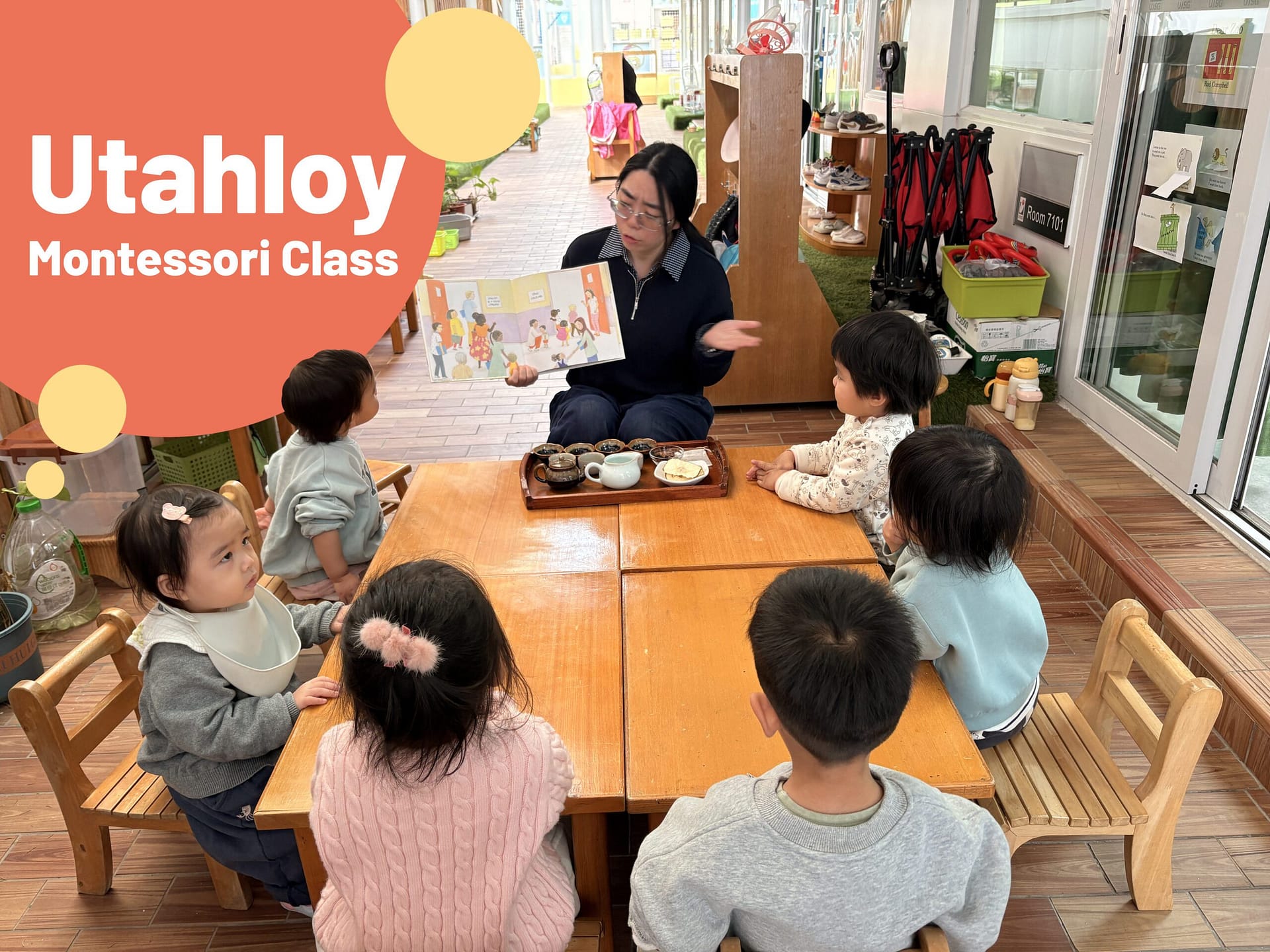
You can already feel the festive spirit quietly filling our Montessori classroom. Right before the holiday break, we held a special tea party—each child brought a traditional dish from their hometown. In that moment, our classroom turned into “A Bite of China.”
The kids sat in a circle, excitedly sharing treasures from their family tables: Xinjiang naan bread, beef jerky, and sweet milk curd; Chaoshan beef balls, thin crackers, and candied winter melon; Shanwei fa gao (prosperity cake); Guangzhou chenpi peanuts, sponge cake, and millet cake… Every dish told a story of home and carried the taste of a special place.

While enjoying the food, we also introduced the children to the art of making tea. Using dried pear slices instead of tea leaves, we showed them how to brew and serve tea, the proper way to pass a cup, and encouraged polite phrases. Some kids even tried saying “tea” in different dialects. It was a beautiful reminder that education can happen naturally and meaningfully.

1. Food Is a Bridge Between the Senses and Culture.
In Montessori, we believe “the hands are the instruments of the mind.” When a child picks up a piece of homemade snack, feels its texture, smells it and slowly tastes it, they aren’t just learning the word “food”—they are experiencing the world with their whole body.
2. Mixed-Age Interaction
Older children helped younger ones identify foods and pour tea; younger ones watched and imitated, carefully tasting new flavors. In a mixed-age setting, learning happens quietly, and care shows up in the little things.
3. From Concrete to Abstract
Food is concrete and touchable. When a child tastes the “sweet” candied winter melon and the “salty” beef jerky, then learns the Chinese characters for sweet (甜) and salty (咸), those abstract symbols suddenly feel warm and real.
4. Heritage and Belonging
When a child proudly says, “This is the taste of my hometown,” they are building a connection to their culture. That feeling is even more precious than knowledge itself. Chinese New Year is the most important family holiday, and for many, “home” is that one familiar taste from childhood.
5. Independence and Responsibility
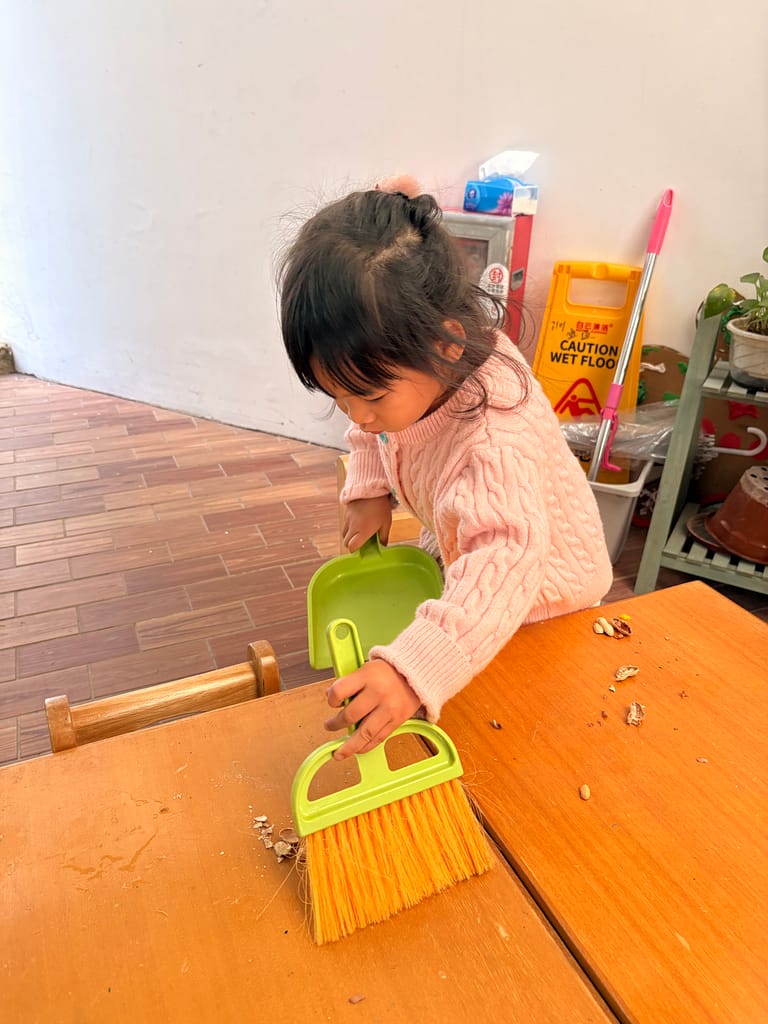
At the end of the activity, the children naturally took charge—some wiped the tables,others put away the chairs. They actively took care of their environment. In a Montessori classroom, children aren’t guests. They are co-managers. This sense of responsibility comes from a deep belief nurtured every day: This space belongs to all of us. I can take care of it, and I want to.
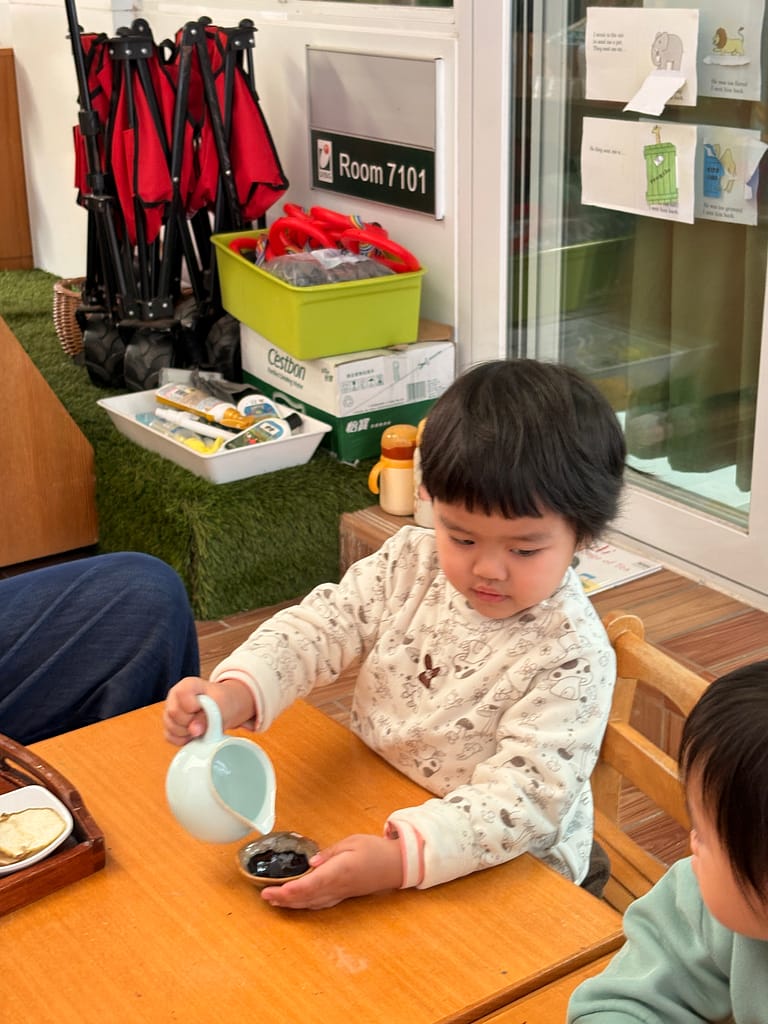
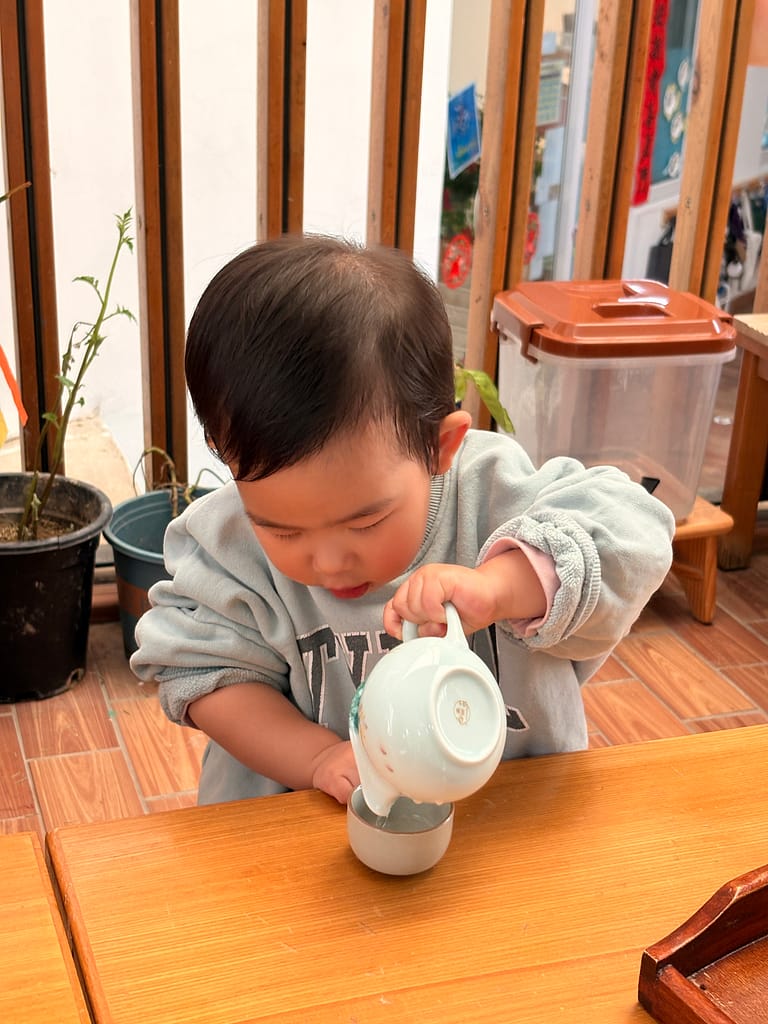
We chose to hold this tea party right before Chinese New Year to let food become a starting point for children to understand “home” and “heritage.”A simple tea party, a room full of festive warmth. The tea aroma lingered, and though the food was eaten, the joy of sharing, the first taste of hometown, and the openness to different cultures have all been planted in their hearts.
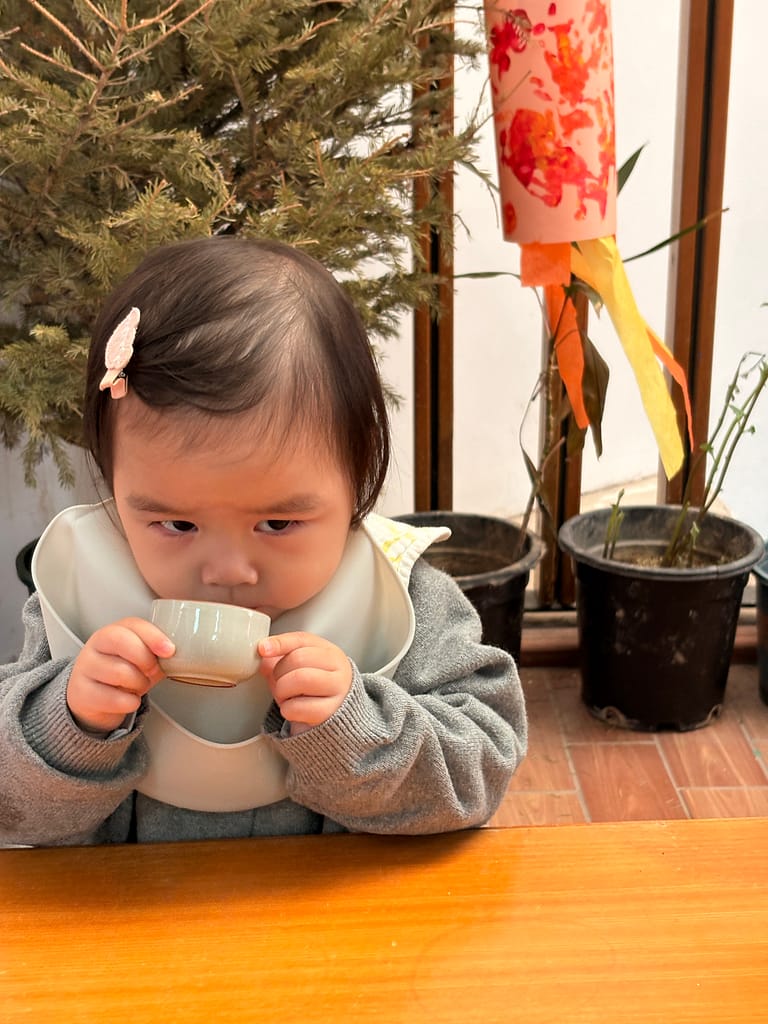
A huge thank you to every parent who helped make this tea party an unforgettable first cultural experience for our children, may every family find their own taste of home around the reunion table.
-END-
为了庆祝传统文化传承,我们举办了一场特别的茶话会——小朋友们从家里带来了代表自己家乡的特色食物。那一刻,教室变成了“舌尖上的中国”。
孩子们围坐一圈,兴奋又期待地介绍着自家餐桌上的“宝贝”:来自新疆的馕,牛肉干和香甜的奶皮子,潮汕的牛肉丸、风吹饼、冬瓜糖,汕尾的发粿,广州的陈皮花生,松糕,小米糕……每一份食物,都是一个家庭的故事,都是一方水土的印记。
品尝美食之余,我们还向小朋友们介绍了冲茶,以雪梨片代替茶叶,展示冲茶的方式,递茶杯的姿势,还鼓励大家使用相关的礼貌用语。甚至学着用方言说 “茶”。原来,教育可以这样自然而然,又如此意味深长。
1. 食物是感官与文化的桥梁
在蒙特梭利教育中,我们相信“手是心智的器官”。当孩子亲手拿起一块家乡的点心,观察它的纹路,嗅闻它的香气,细细咀嚼它的味道,他不仅在学习“食物”这个概念,更在用整个身体去感知世界。
2. 混龄互动
大孩子带着小孩子辨认食物,帮忙倒茶水;小孩子模仿大孩子的模样,小心翼翼地品尝未知的味道。混龄环境中,学习在无声中发生,关怀在细节里流淌。
3. 从具体到抽象
食物是具体的、可触摸的。当孩子品尝过“甜”的冬瓜糖、“咸”的牛肉干,再认识汉字“甜”“咸”时,这些抽象的符号便有了温度。
4. 传承与归属
当孩子骄傲地说“这是我家乡的味道”时,他正在建立对故土的归属感。这份情感,远比知识本身更珍贵。春节,是中国人最隆重的团圆节。而“家乡”,往往是童年里那一口熟悉的味道。
5. 独立性与责任感
活动最后,孩子们自主分工合作,有人清洁桌面,有人将桌椅归位,积极承担起照顾环境责任。孩子不是教师的客人,而是共同管理者。这种自发的责任感,源于日常蒙氏环境中反复浸润的信念:环境属于我们每一个人,我有能力照顾它,也愿意照顾它。
这次茶话会,我们特意选在春节前夕,让食物成为孩子理解“家”与“国”的起点。 一席茶话,满屋年味。茶香袅袅中,食物或许会被吃完,但那份分享的喜悦、对家乡的初识、对多元的包容,已然种在心间
感谢每一位家长倾注心力,精心准备了饱含家乡记忆的传统美食。大家带来的不仅是味觉的惊喜,更是文化的种子——让孩子们通过品尝的各个家庭滋味,真切地触碰到不同地域的风土与人情。这份带着温度的参与,让这次简单的茶话会升华为一次生动而温暖的“文化初体验”,在孩子们心中埋下了好奇与尊重的萌芽。
-END-

 Chinese
  English
  Korean
  Japanese