


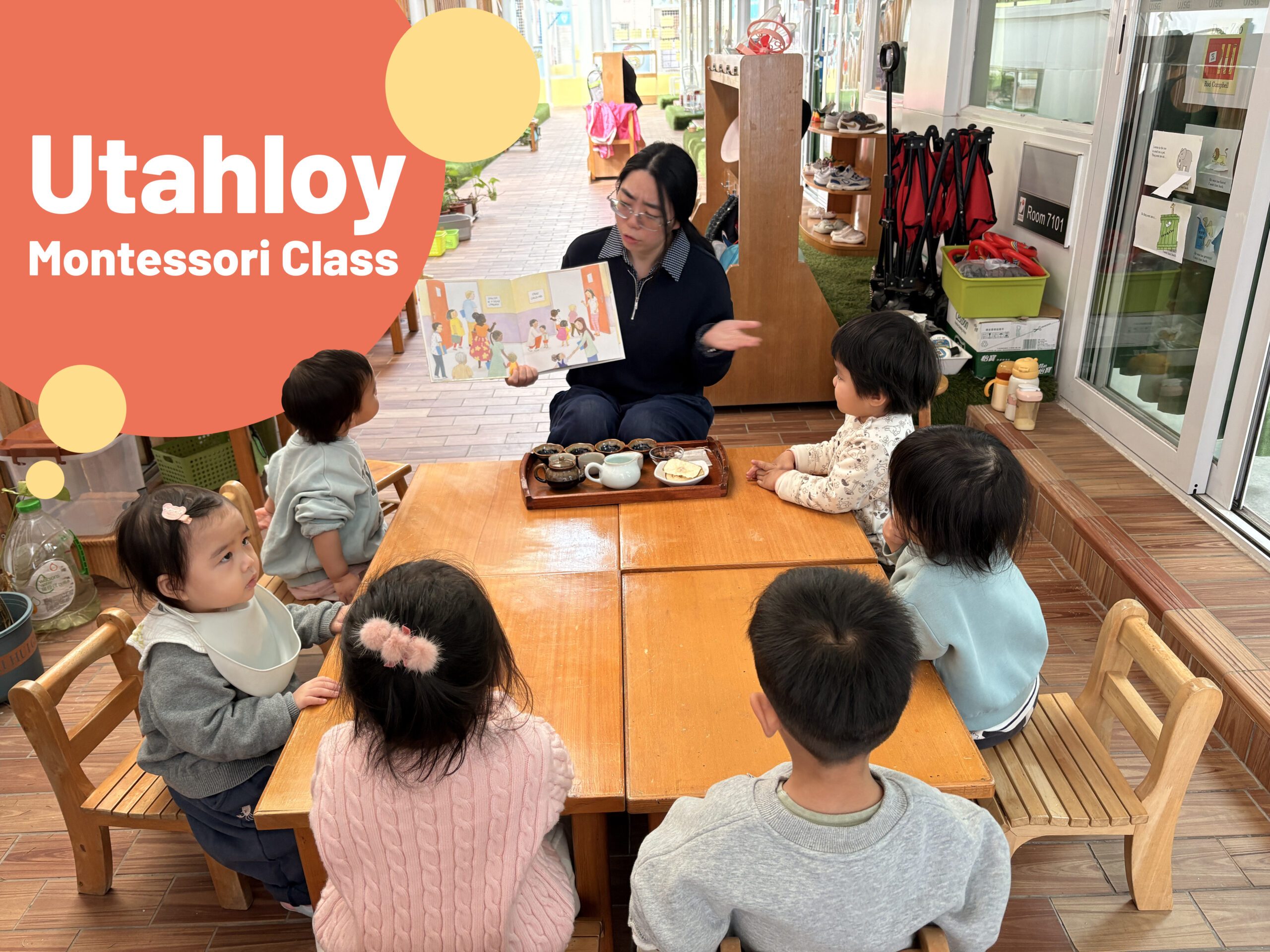
You can already feel the festive spirit quietly filling our Montessori classroom. Right before the holiday break, we held a special tea party—each child brought a traditional dish from their hometown. In that moment, our classroom turned into “A Bite of China.”
The kids sat in a circle, excitedly sharing treasures from their family tables: Xinjiang naan bread, beef jerky, and sweet milk curd; Chaoshan beef balls, thin crackers, and candied winter melon; Shanwei fa gao (prosperity cake); Guangzhou chenpi peanuts, sponge cake, and millet cake… Every dish told a story of home and carried the taste of a special place.
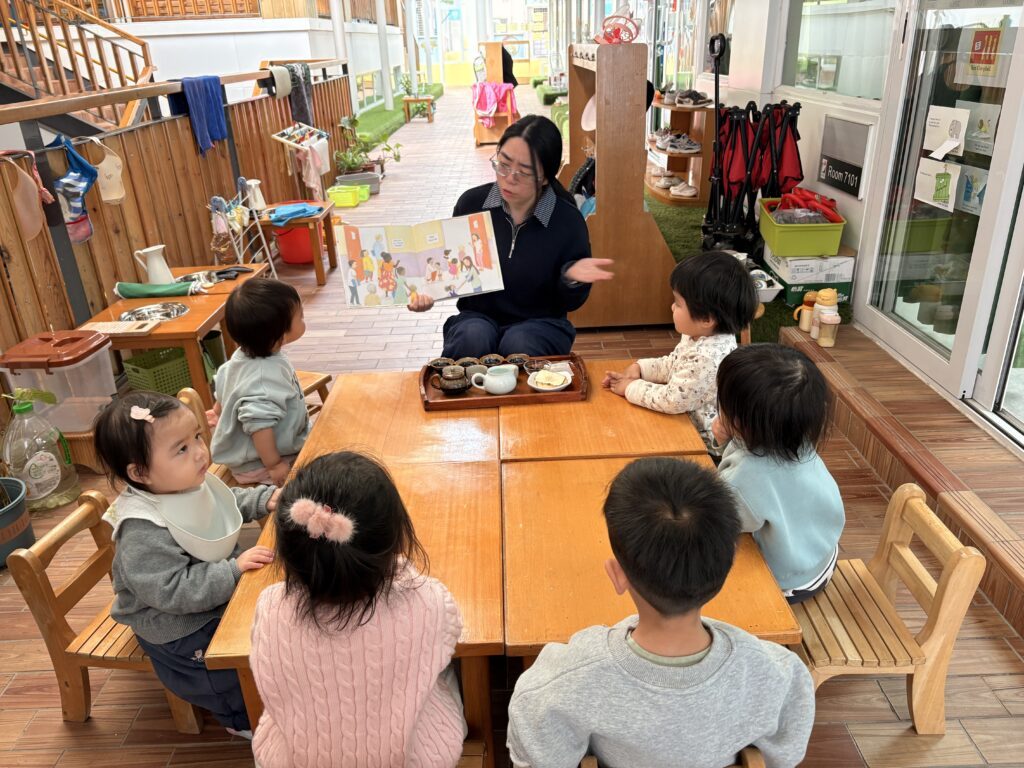
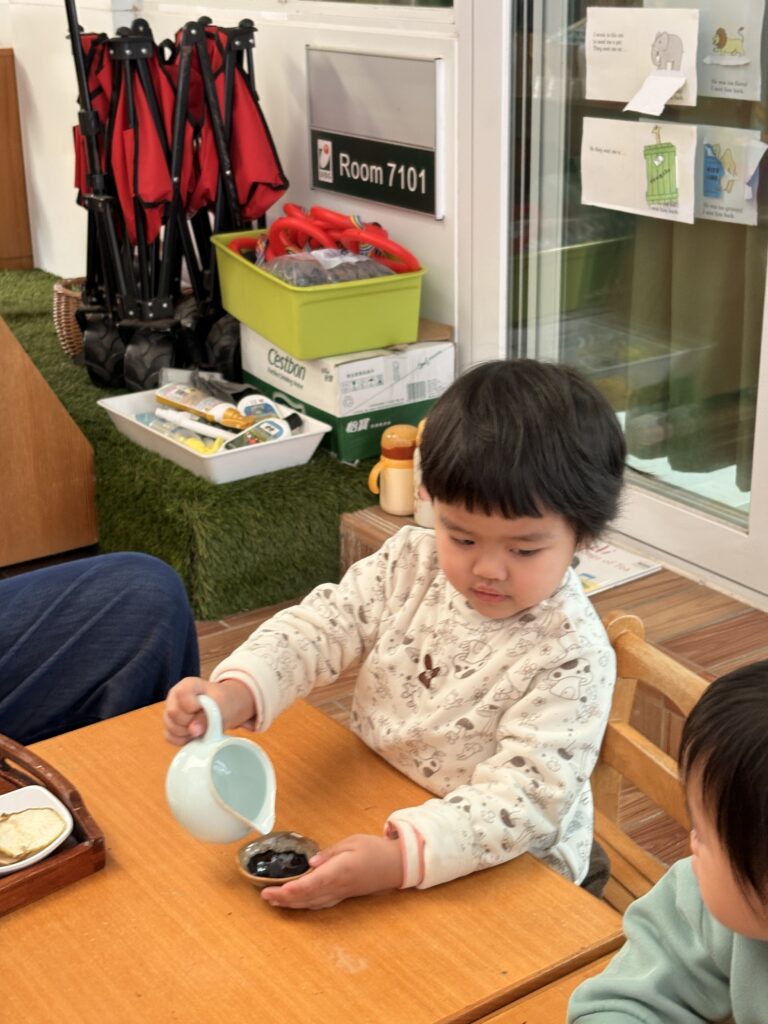
While enjoying the food, we also introduced the children to the art of making tea. Using dried pear slices instead of tea leaves, we showed them how to brew and serve tea, the proper way to pass a cup, and encouraged polite phrases. Some kids even tried saying “tea” in different dialects. It was a beautiful reminder that education can happen naturally and meaningfully.
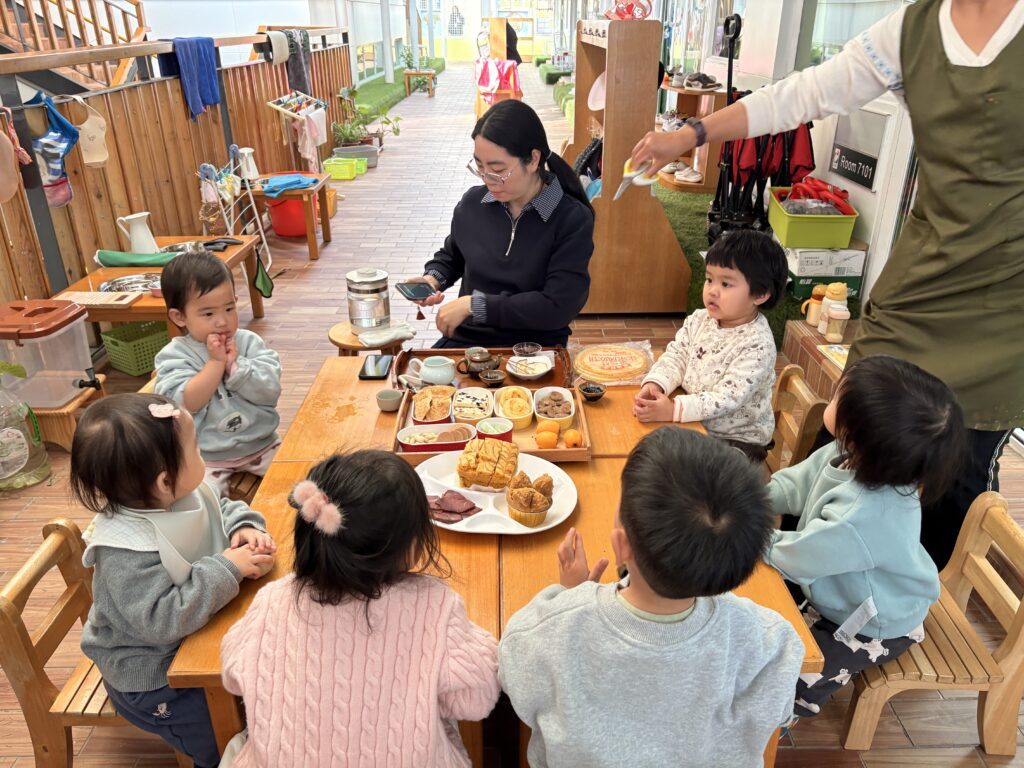
1. Food Is a Bridge Between the Senses and Culture.
In Montessori, we believe “the hands are the instruments of the mind.” When a child picks up a piece of homemade snack, feels its texture, smells it and slowly tastes it, they aren’t just learning the word “food”—they are experiencing the world with their whole body.
2. Mixed-Age Interaction
Older children helped younger ones identify foods and pour tea; younger ones watched and imitated, carefully tasting new flavors. In a mixed-age setting, learning happens quietly, and care shows up in the little things.
3. From Concrete to Abstract
Food is concrete and touchable. When a child tastes the “sweet” candied winter melon and the “salty” beef jerky, then learns the Chinese characters for sweet (甜) and salty (咸), those abstract symbols suddenly feel warm and real.
4. Heritage and Belonging
When a child proudly says, “This is the taste of my hometown,” they are building a connection to their culture. That feeling is even more precious than knowledge itself. Chinese New Year is the most important family holiday, and for many, “home” is that one familiar taste from childhood.
5. Independence and Responsibility
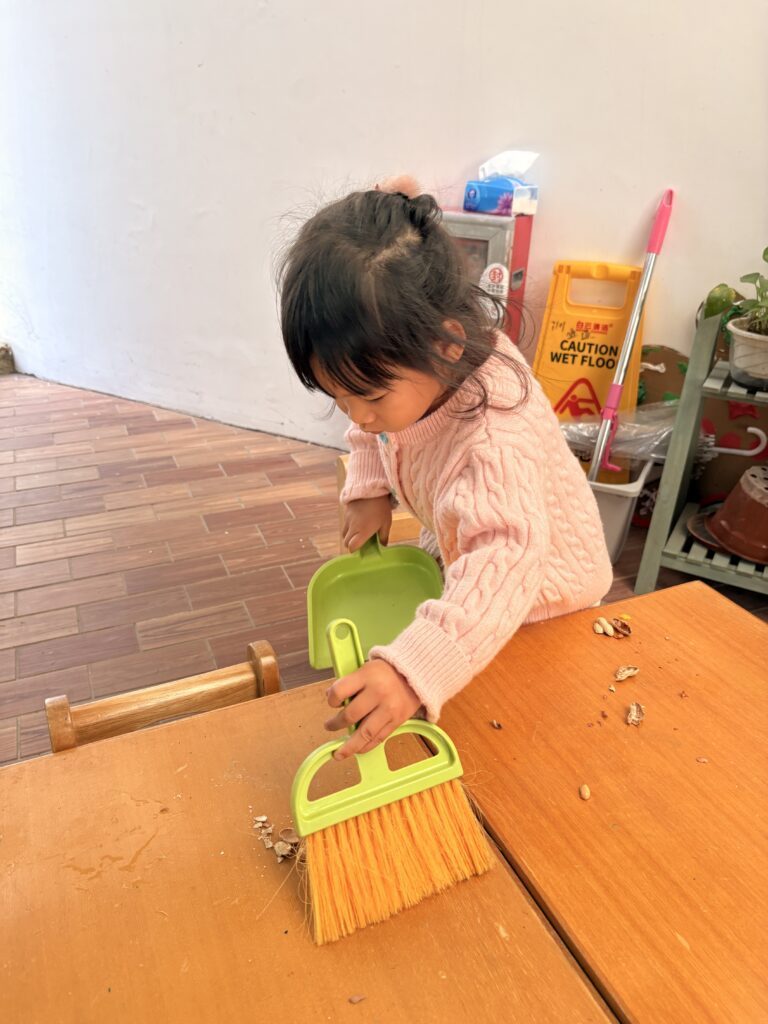
At the end of the activity, the children naturally took charge—some wiped the tables,others put away the chairs. They actively took care of their environment. In a Montessori classroom, children aren’t guests. They are co-managers. This sense of responsibility comes from a deep belief nurtured every day: This space belongs to all of us. I can take care of it, and I want to.
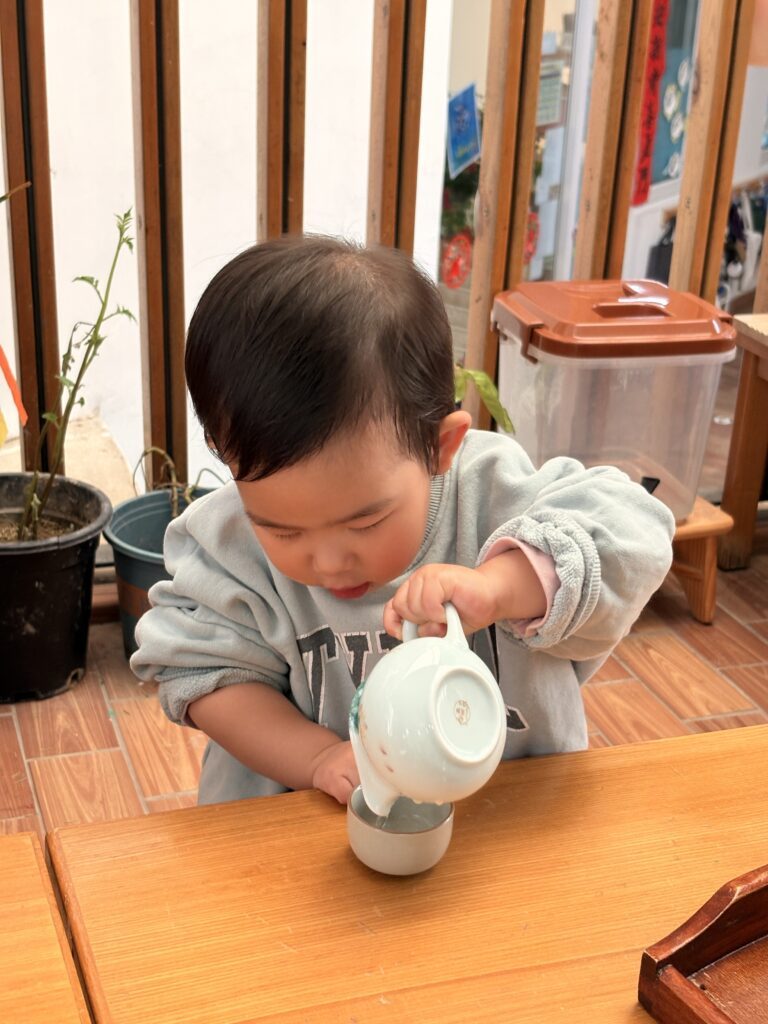
We chose to hold this tea party right before Chinese New Year to let food become a starting point for children to understand “home” and “heritage.”A simple tea party, a room full of festive warmth. The tea aroma lingered, and though the food was eaten, the joy of sharing, the first taste of hometown, and the openness to different cultures have all been planted in their hearts.
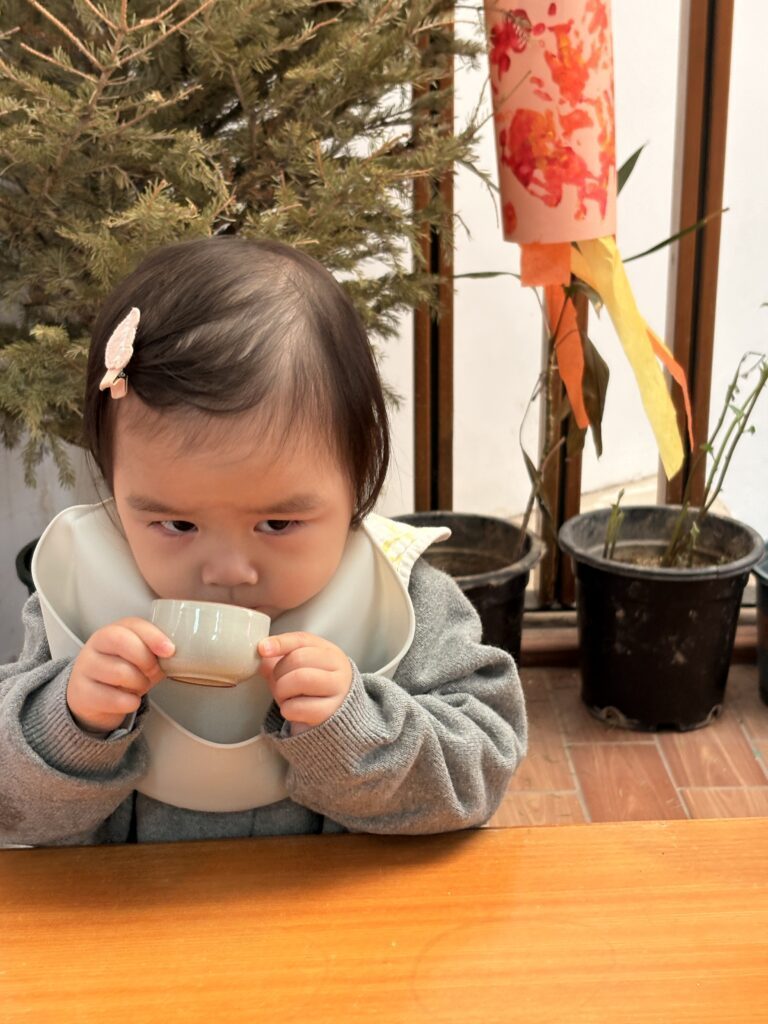
A huge thank you to every parent who helped make this tea party an unforgettable first cultural experience for our children, may every family find their own taste of home around the reunion table.
-END-
-END-


 English
 Chinese
 Korean
 Japanese