


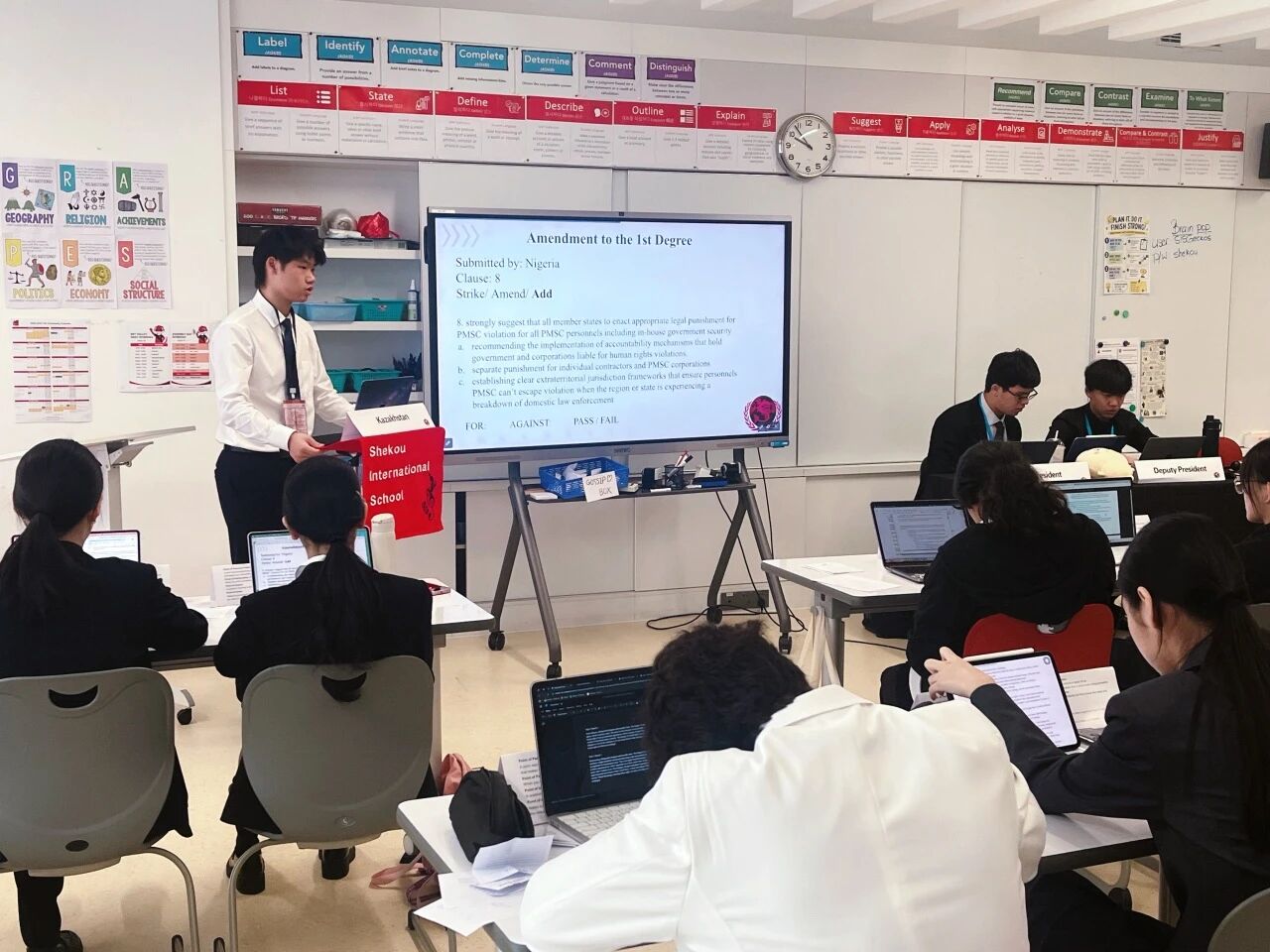
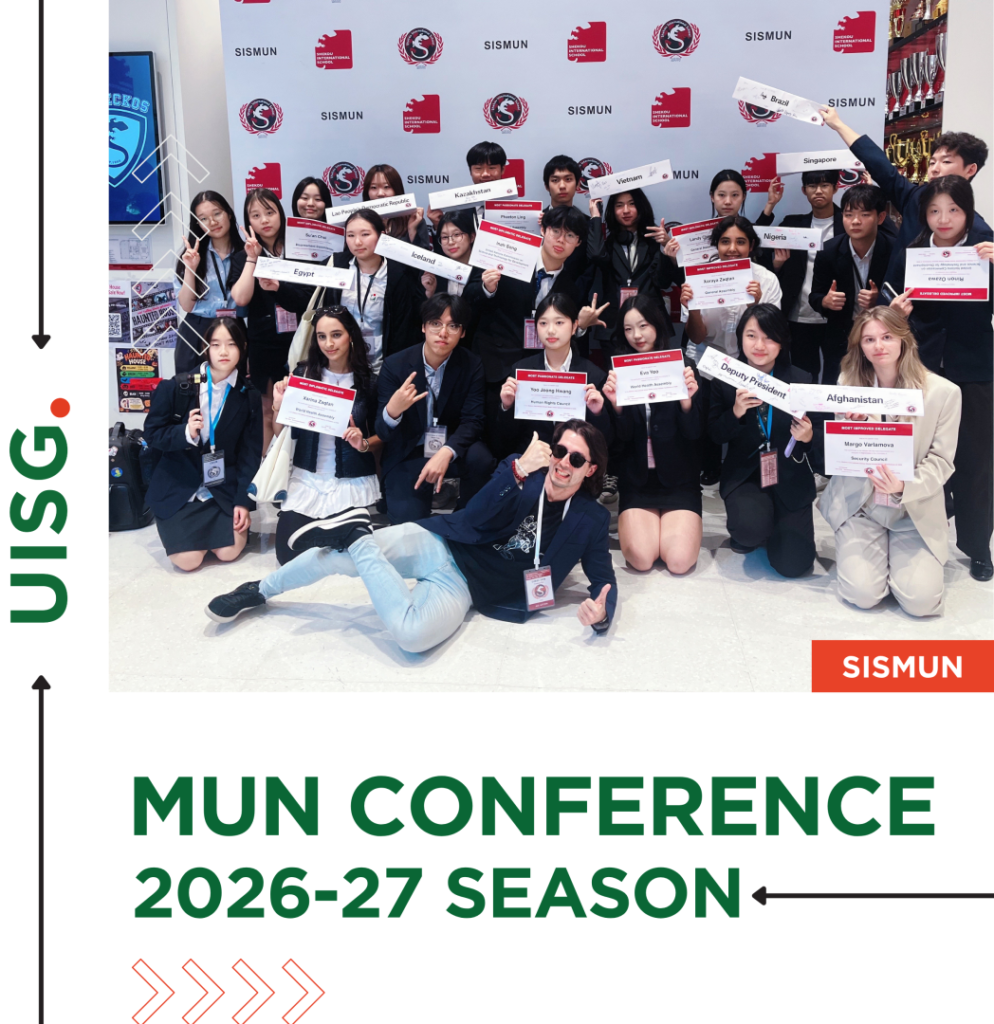
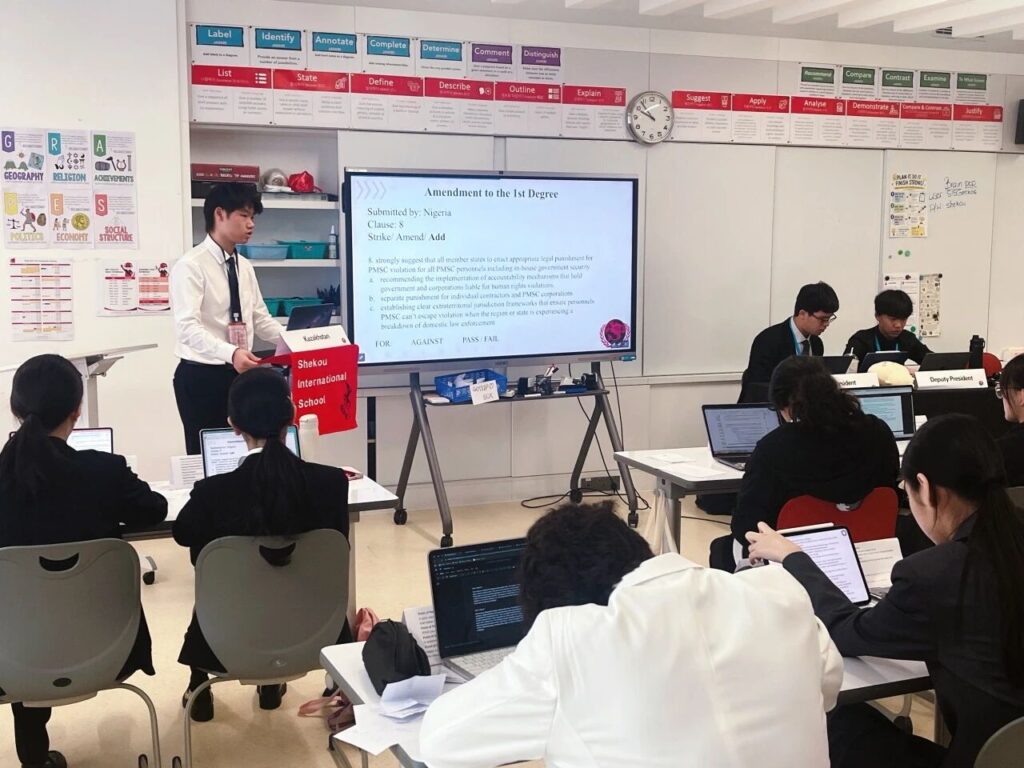
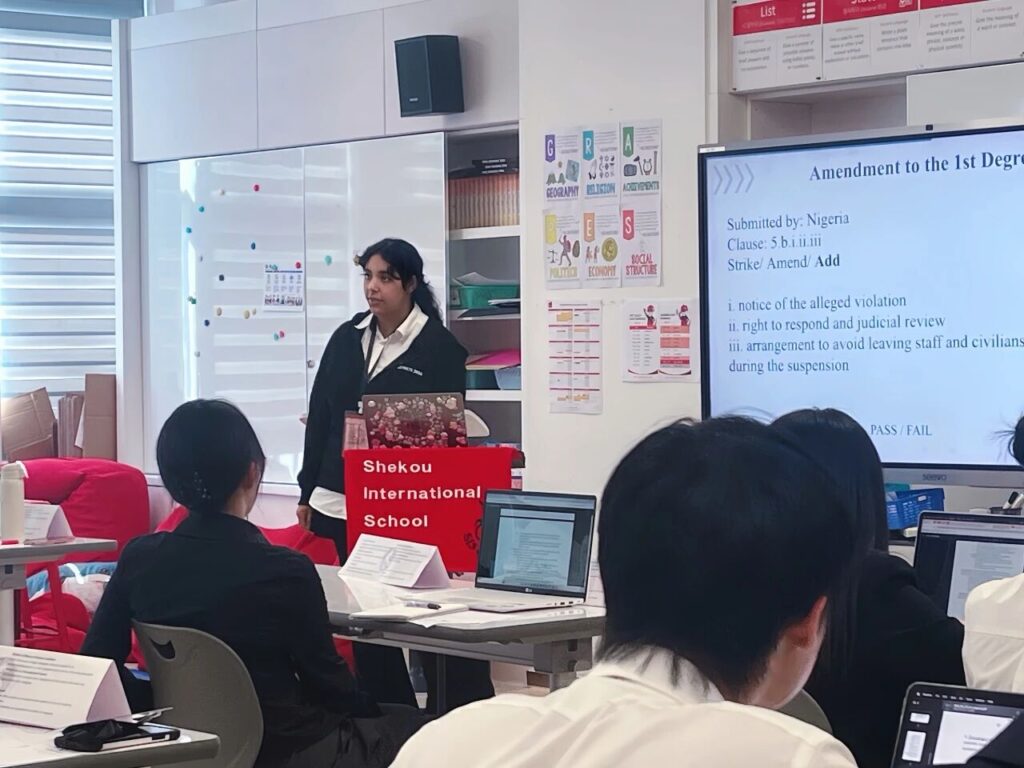
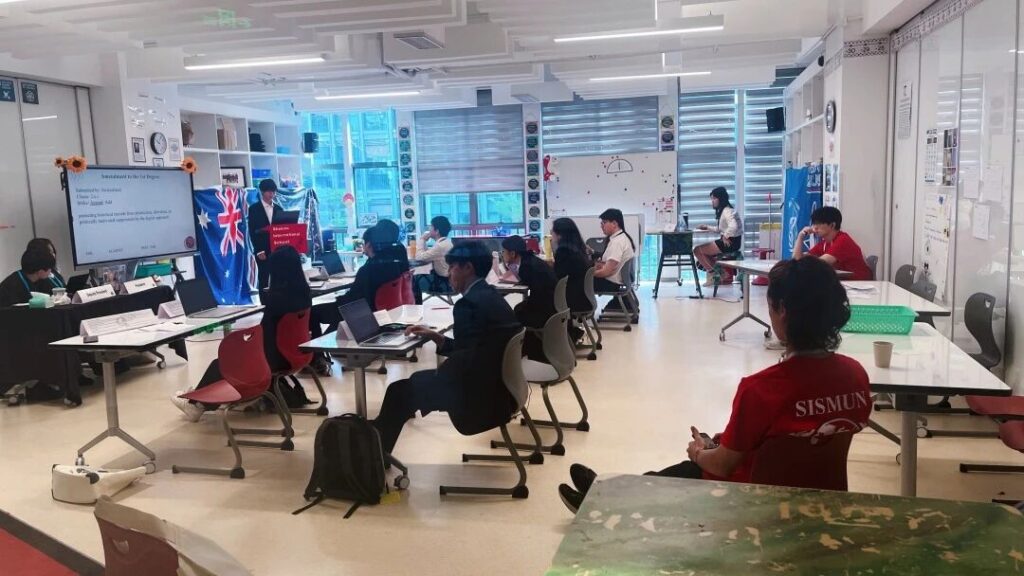
The MUN season at UISG began with our first conference of the year: SISMUN, held at Shekou International School (SIS).
MUN is a popular extracurricular activity in many international schools. Students play the role of a country and defend its stance on a given issue, much like at a real United Nations Assembly.
Each student, or “delegate,” sits in a committee discussing a set topic. “Chairs” moderate these sessions and keep them in line with parliamentary procedure. Delegates then work with others to pass a resolution that tries to solve the problem.
This year, the club brought 23 delegates from grades 9 to 12.
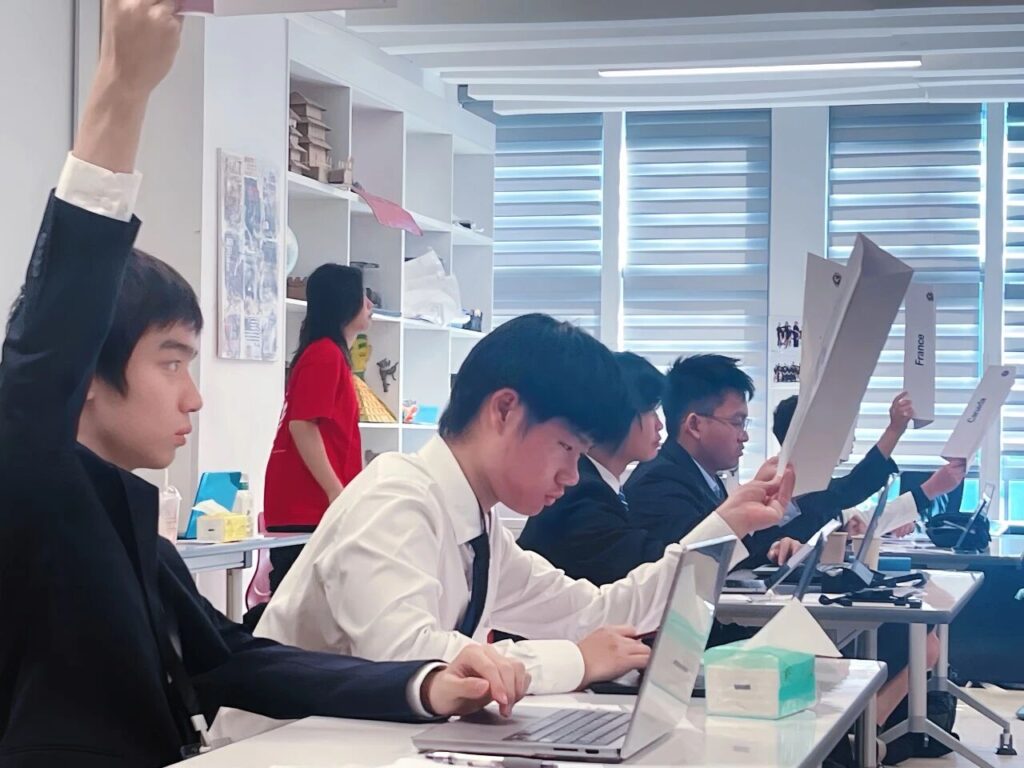
About half were experienced members ready for high-level diplomatic simulation. The others were new members looking to learn what Model United Nations is all about. Among the delegates were also two first-time chairs.
UISG made its presence felt at this well-attended conference, from delegates to committee leaders.
This year, SIS organizers put on an exciting conference with a timely theme: the price of progress. Rapid AI advancements are changing entire industries and raising fears of human-to-machine replacement. Meanwhile, regional wars and trade barriers make the world uncertain. These high schoolers made their voices heard on these complex problems.

MUN requires both breadth and depth at once. It brings together deep research on a given topic. This year, topics ranged from the situation in the Persian Gulf, to transnational organized crime, to youth unemployment. Students must also know about other countries, their stances, and their histories. They do all this on the fly while proposing solutions.
This need for range and focus was highlighted on the first day. That night, the conference held a brief keynote by Prof. Sang Yop Kang, Professor of Law at Peking University School of Transnational Law. Building on the conference theme, Prof. Kang called on delegates to be “general specialists.” The world of law, politics, and technology is changing fast. While young people should have specialized vocations, they should also be exposed to many disciplines and perspectives. Being both a generalist and a specialist will help you make connections across fields for the world of tomorrow, he noted.
With Prof. Kang’s keynote in the rearview, the second day unfolded with debates, resolution writing, amendments, and fiery speeches. But students got some respite at the end of the day. We always expect delegates to dress their best and simulate discussions about existential transnational issues. Still, you can’t blame teenagers for wanting to have a little fun!
That night the venue lit up with youthful energy. Both students and directors took part in a talent show. UISG once again showed the well-roundedness of its student body. Three students performed in total: one vocal/acoustic guitar duo and another solo singing/guitar act. The latter played two songs!
It was great to see our Wolves answer the call, whether in debating or performing on stage.
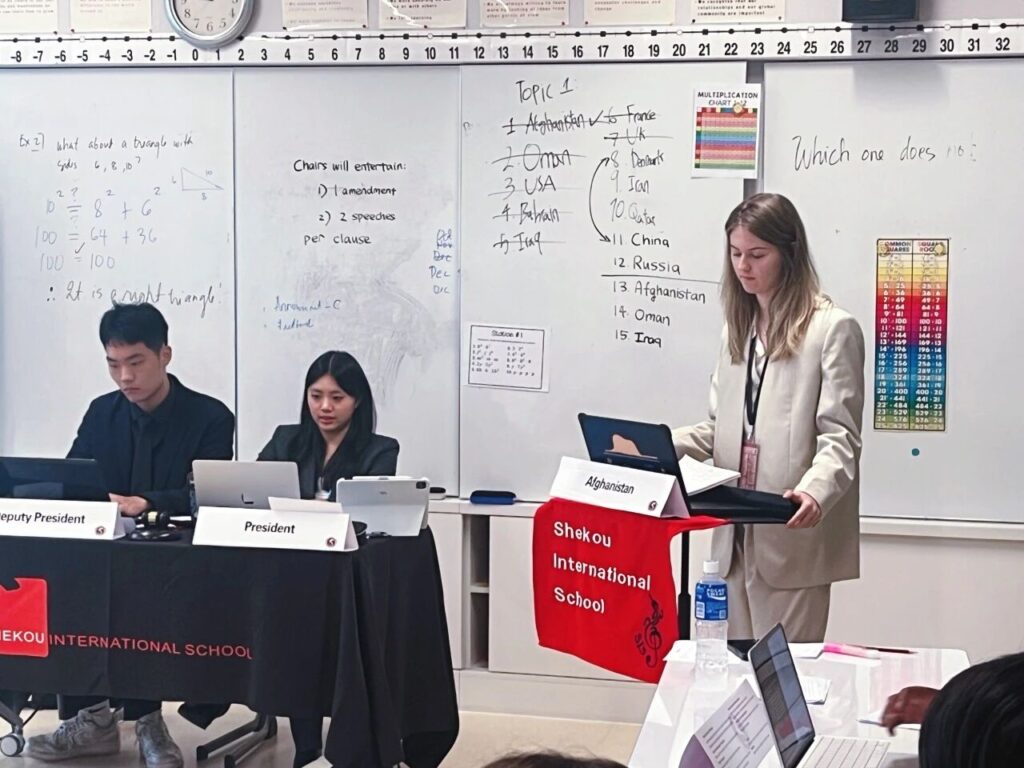
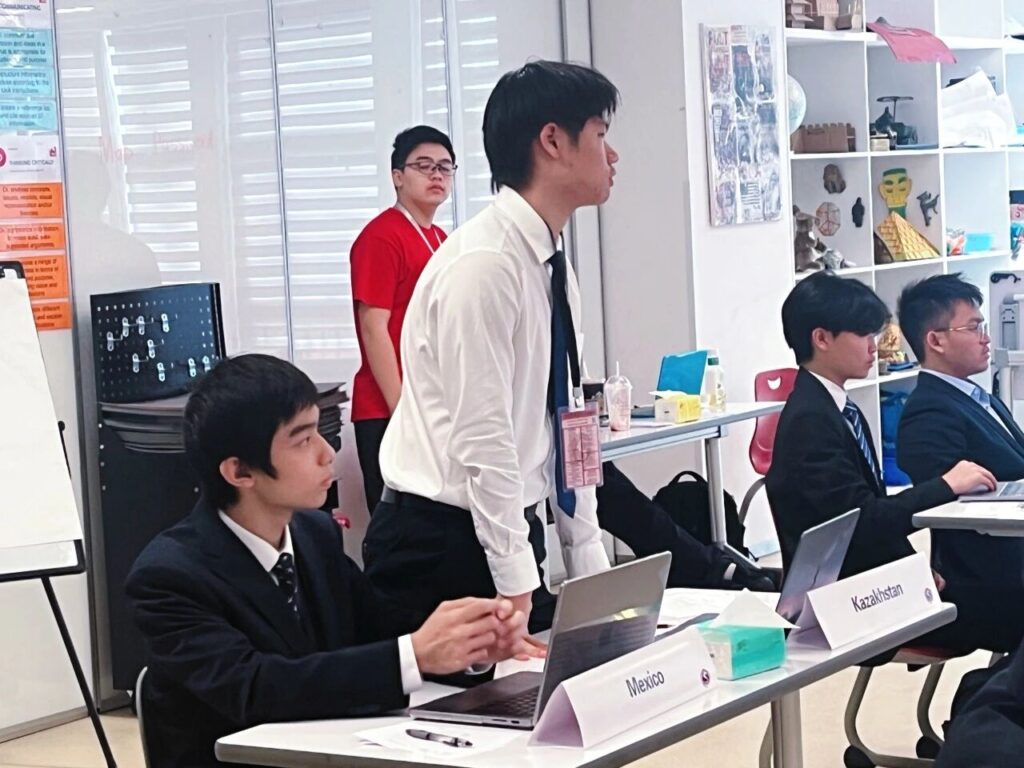
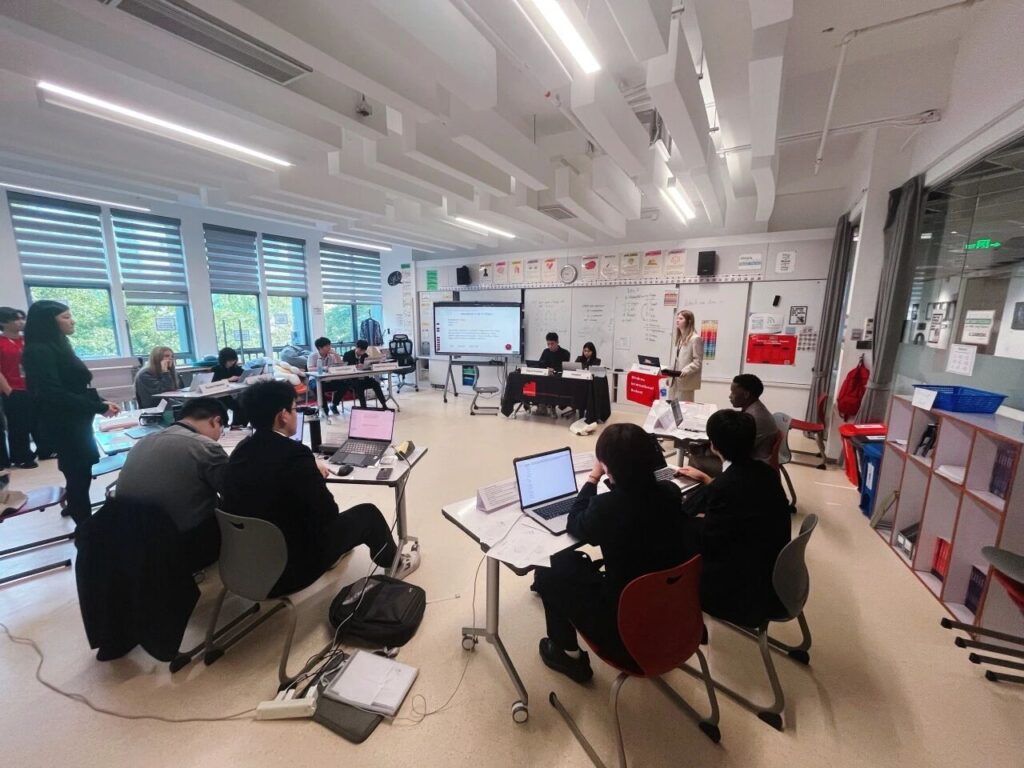
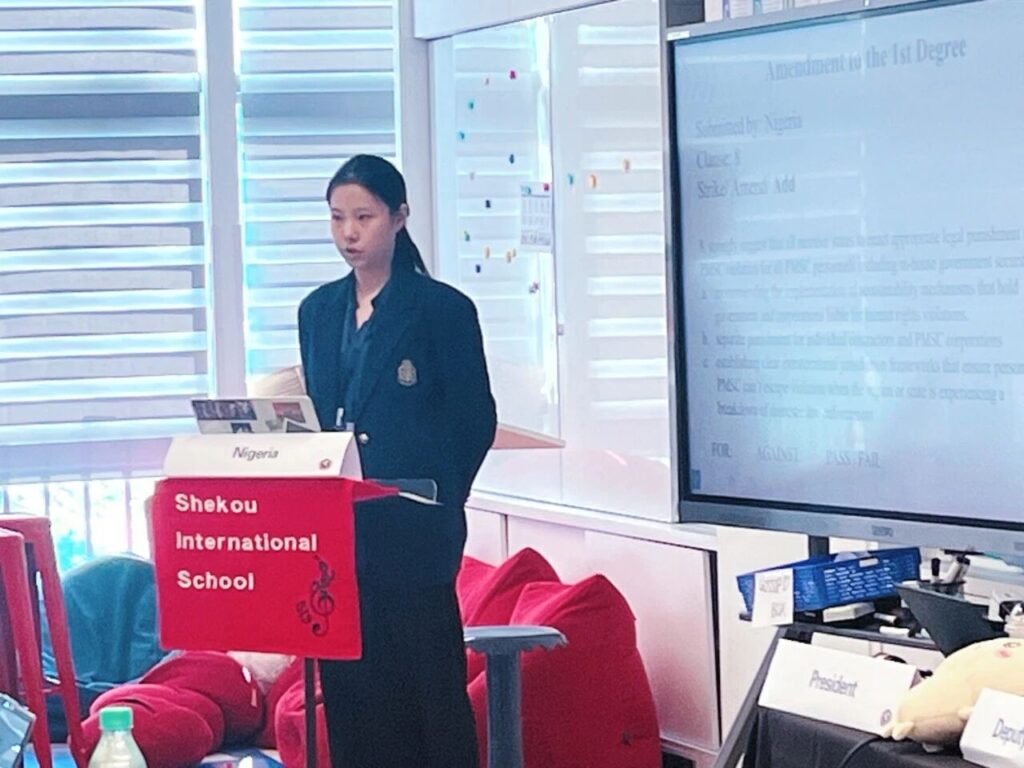
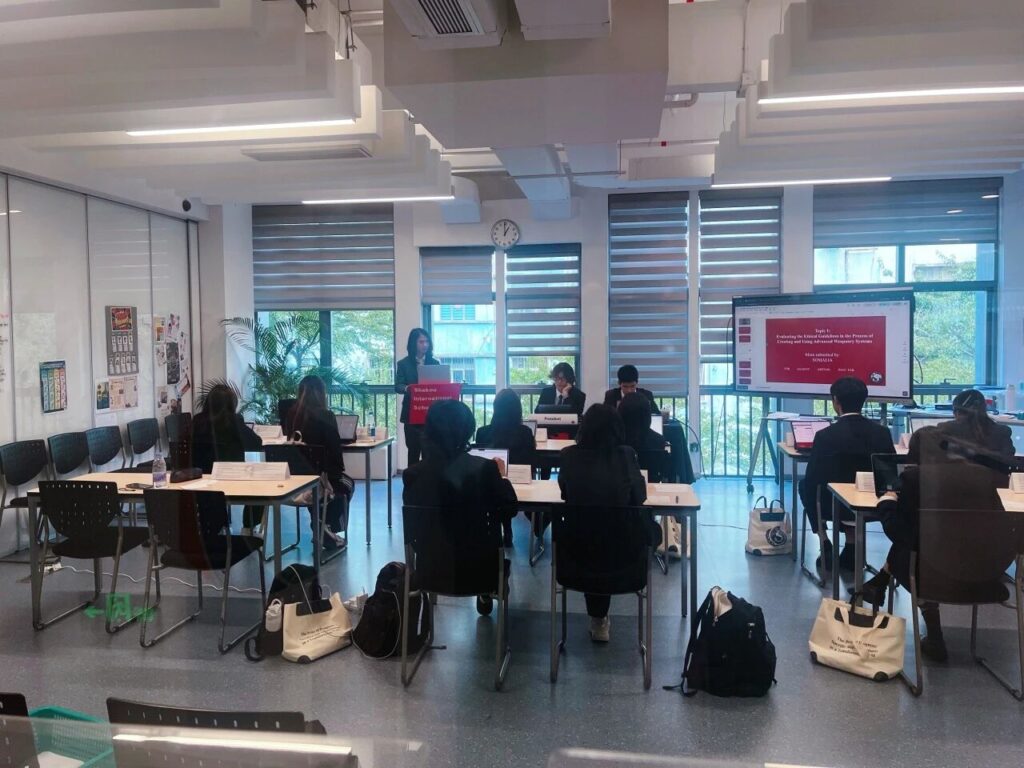
The dust settled from all the excitement. Our Wolves walked away with a successful experience, picking up a few awards along the way. The process is always transformative for students. Each conference gives them a little more confidence in presenting, negotiating, and networking. But more lasting is the critical exercise in perspective-taking and role-playing. It allows them to see the world through another’s lens.
This generation will inherit a complex world. There will be an urgent need for those who can move seamlessly across important problems and build consensus along the way. UISG’s MUN delegates will be one step ahead!
/ END /

 English
 Chinese
 Korean
 Japanese